Vuk Velebit, Petar Ivić, Aleksa Jovanović
Serbia’s Foreign Policy Strategy for Proactive Engagement with the United States
Laying out the core postulates of a potential foreign policy strategy that clearly steers Serbia toward partnership with the US and the West

With the release of the United States’ National Security Strategy in December 2025, the global audience gained a clearer view of the strategic recalibration Washington intends to pursue. While the document is, by design, global in scope, this analysis focuses on Europe, and more specifically on Southeastern Europe, where Serbia is also situated. A close reading of the strategy reveals substantial maneuvering space for countries in the region, including Serbia, to deepen their ties with the US and capitalize on the current momentum to position themselves as more reliable, constructive, and strategically relevant partners.
“Our broad policy for Europe should prioritize building up the healthy nations of Central, Eastern, and Southern Europe, through commercial ties, weapons sales, political collaboration, and cultural and educational exchanges.” - National Security Strategy 2025, page 27
Serbia stands at a strategic crossroads at the very dawn of 2026, with a unique opportunity to redefine its foreign policy and solidify itself as the United States’ key strategic partner in the Western Balkans. As the region’s largest economy and a pivotal political actor, Serbia can leverage the current geopolitical momentum, marked by renewed US engagement and accelerated European integration efforts, to adopt a proactive, realist foreign policy strategy. This document proposes a comprehensive strategy that aligns Serbian and US interests, building on the recently announced launch of the US-Serbia Strategic Dialogue and focusing on critical areas: energy cooperation, with emphasis on renewables and LNG, security and cybersecurity collaboration, digital infrastructure, and defense/military alignment. The strategy underscores Serbia’s potential role as a linchpin of regional stability and a frontline partner in countering malign foreign influence.
Strategic Context
Over the past year, shifting global and regional dynamics have created a favorable context for Serbia to recalibrate its foreign policy. The war in Ukraine and great-power competition have exposed the risks of “sitting on the fence” and increased the value of firm partnerships. Western powers are refocusing on Southeastern Europe’s stability, recognizing that unresolved Balkan issues can undermine broader European security. A stable, EU-aligned Balkans is seen as essential to reinforcing Europe’s defense and energy security.
“A larger and stronger Europe is a security guarantee for all of us. The future of Ukraine, Moldova, and the Western Balkans lies in the EU, and that is why we must work together to reunite Europe once again.” - Ursula von der Leyen, September 10, 2025
At the same time, the new US administration in 2025 has sharpened its focus on Eastern Europe. This shift reflects a clear realist recalibration in Washington. The primary US interest in Europe is now the sharing of burdens and responsibilities, rather than open-ended security provision. In that context, Eastern European countries fit this approach particularly well, given their solid defense spending, strong security awareness, and value frameworks that largely align with those of the current US administration.
In this context, Serbia, which since the start of the war in Ukraine has pursued a subtle but clearly West-leaning foreign policy, faces a real strategic opening. Through sustained defense spending (2.6% GDP, practical cooperation with NATO (Partnership for Peace), and a clear obligation to bring its energy sector back under national control rather than leave it exposed to malign Russian influence, Serbia has already been signaling its direction. What is now missing is a formal foreign policy strategy that consolidates and confirms these principles. Such a document would remove ambiguity, reduce room for speculation, and clearly position Serbia as a serious, predictable partner of the US and the broader Western community.
Key Interests and Objectives
For Serbia, the core national interests underpinning a Serbia–US strategic partnership include:
Preserving national security and ensuring long-term political and economic stability
Fostering economic development, investment, and technological modernization
Ensuring energy security, diversification, and reduced exposure to malign external influence
Protecting cyberspace and critical infrastructure, including energy, transport, and digital systems
Stabilizing the Western Balkans, with particular emphasis on Kosovo and constructive relations with neighboring states
The primary framework for advancing these shared interests is the announced Strategic Dialogue between Serbia and the United States. Washington initiates such dialogues selectively, and only with countries it views as relevant and capable actors within their regional context. Serbia’s inclusion reflects growing US recognition of its strategic weight in the Western Balkans, its defense spending and security cooperation, and its ability to influence regional stability. This mechanism provides a structured channel to align priorities, reduce ambiguity, and move from ad hoc cooperation to a more predictable and consequential partnership.
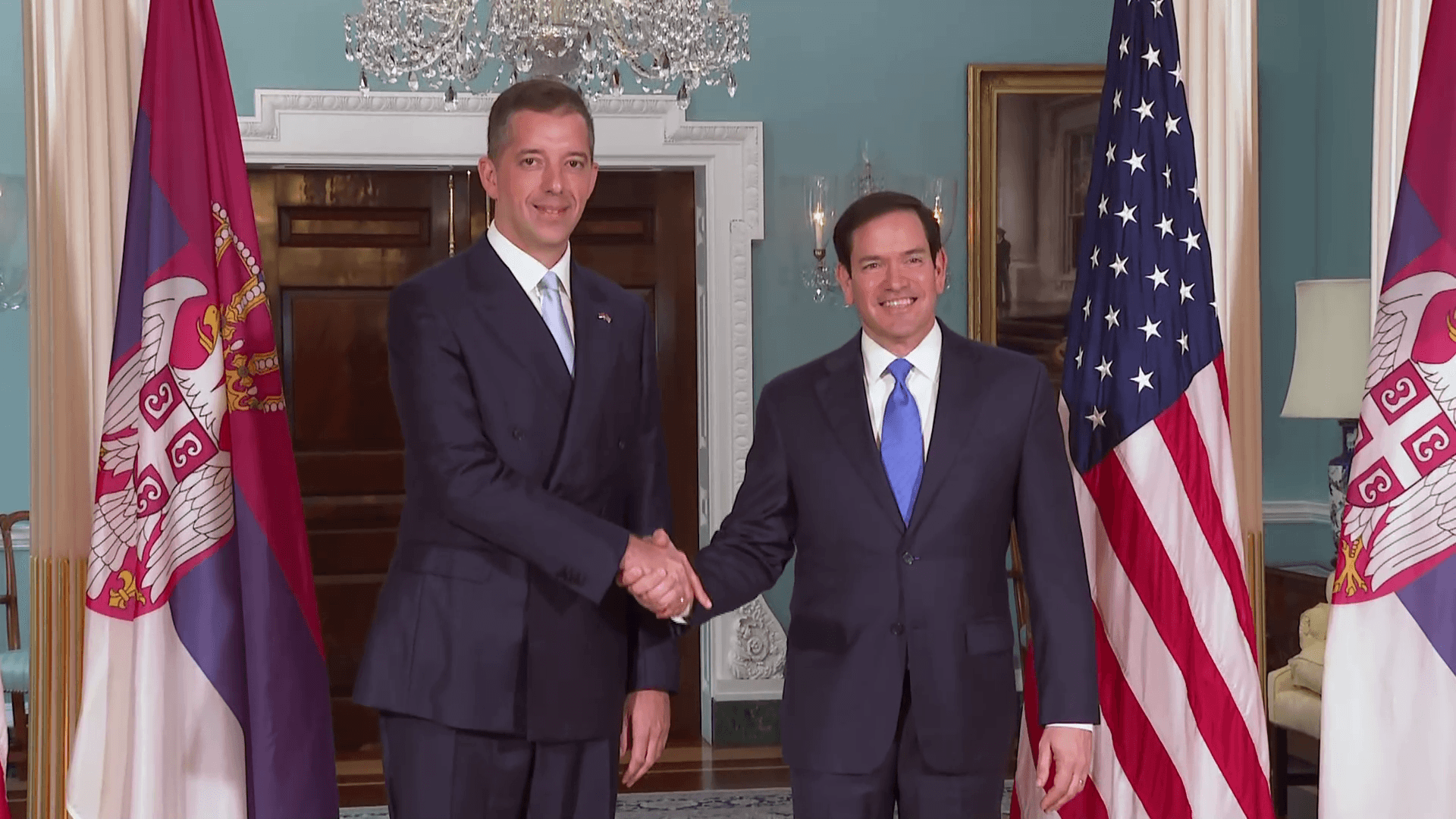
Serbia’s Foreign Minister Marko Đurić with the US Secretary of State Marko Rubio, August 6, 2025
In this context, the US position outlined in the 2025 National Security Strategy fits Serbia particularly well. Washington signals readiness to offer more favorable commercial treatment, technology cooperation, and defense procurement to partners willing to assume greater responsibility for their own security and align with US standards, including export controls. Serbia’s trajectory, marked by increased defense investment, practical NATO cooperation, and efforts to reclaim control over its energy sector, places it squarely within this category.
“The United States will stand ready to help — potentially through more favorable treatment on commercial matters, technology sharing, and defense procurement — those countries that willingly take more responsibility for security in their neighborhoods and align their export controls with ours.” - National Security Strategy 2025, page 12
Serbia’s Regional Role: A Stabilizing Anchor
As the largest ($100 billion GDP in 2025) and the most populated country (6.7 million) in the Western Balkans, Serbia inevitably carries outsized responsibility for the region’s stability and direction. Its economic weight, central geography, and investment-driven infrastructure development mean that Belgrade’s policy choices have regional consequences. A Serbia that is economically dynamic and aligned with Western standards can act as a driver of growth, integration, and stability across the Balkans, while prolonged political ambiguity or estrangement from the West would inevitably slow the region’s EU path and undermine security.
Serbia plays a stabilizing role in the Western Balkans primarily through what it does, rather than through declarative rhetoric. It maintains full diplomatic relations with its neighbors, supports regional EU-backed cooperation frameworks such as the Berlin Process, Open Balkan, and CEFTA, and functions as the region’s largest trading partner and economic anchor. Through these mechanisms, Serbia contributes to labor mobility, trade integration, and economic interdependence, all of which are essential stabilizers in a region facing demographic decline and outward migration. At the same time, Serbia has demonstrated a consistent willingness to engage constructively in dialogue-based processes (with Priština, implementing around 80% of the agreed terms in the Brussels Agreement).
Energy Cooperation Toward Security and Sustainability
Achieving energy security is a cornerstone of Serbia’s strategic realignment with the West. For decades, Serbia depended heavily on a single supplier, Russia, for natural gas, leaving it vulnerable to supply disruptions and geopolitical pressure. The new approach prioritizes diversification of energy sources and partners, with a focus on renewable energy development and Liquefied Natural Gas (LNG) imports as dual pillars. The September 2024 US-Serbia energy cooperation agreement marked an inflection point: it commits both nations to expanding opportunities for US investment in Serbia’s energy sector and driving a green transition in Serbia’s economy. This multi-year effort, involving multiple US agencies, not only facilitates Serbia’s shift toward clean energy (solar, wind, hydro, and potentially nuclear) in line with EU climate standards, but also strengthens bilateral ties as a de facto strategic partnership. By implementing high standards of transparency and openness in energy projects, Serbia can ensure that new energy infrastructure is financed and built by trusted partners rather than through opaque deals that often accompany malign influence.
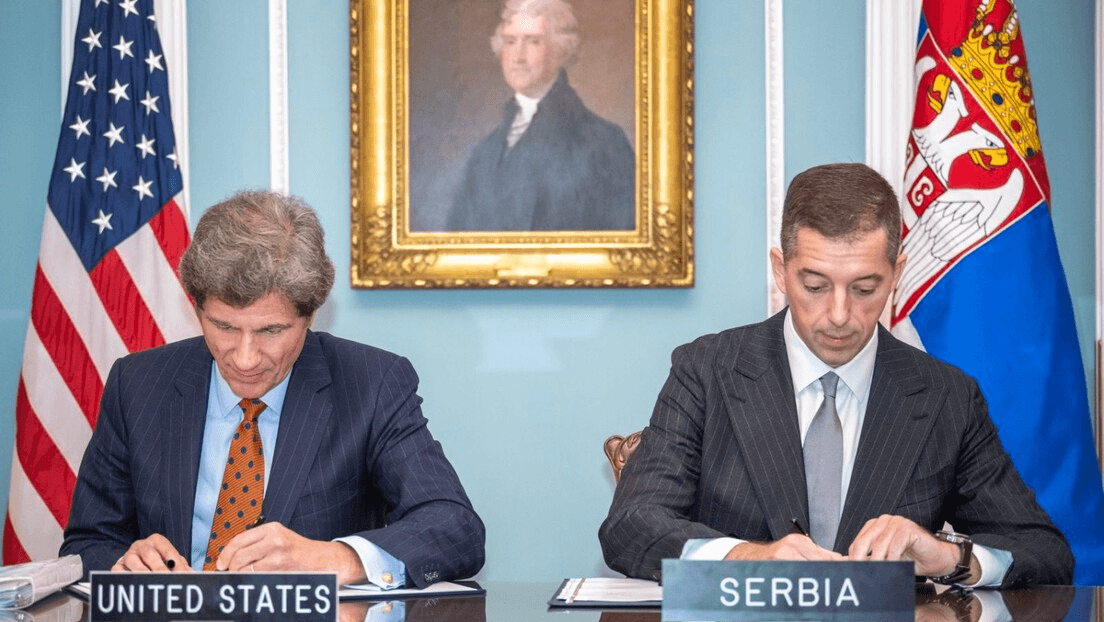
US Under Secretary Jose W. Fernandez and Serbia’s Foreign Minister Marko Đurić sign a US-Serbia Strategic Energy Cooperation Agreement in Washington (September 2024), a major step to bolster Serbia’s energy security and green transition
A priority initiative under this strategy is to secure alternative gas supply routes. Serbia is already constructing interconnectors (e.g., through Bulgaria) that will give it access to LNG terminals in Greece (Alexandroupolis) and pipeline gas from Azerbaijan, reducing dependence on Russian pipelines. US support for these efforts is crucial, whether through diplomacy to facilitate regional energy projects or through US companies investing in Serbia’s gas infrastructure and storage. By tapping into LNG (including potential US LNG exports) and linking to Southern Gas Corridor networks, Serbia can achieve a more resilient and competitive gas supply mix. This could be accelerated further, given the fact that Hungary (Serbia’s neighbour) signed a five-year liquefied natural gas (LNG) supply agreement with the United States under which Chevron will deliver a total of about 2 billion cubic meters of US LNG over the next five years (approximately 400 million m³ per year).
In parallel, Serbia is poised to accelerate renewable energy projects. American and European firms are eager to invest in Balkan renewables, from solar parks (Serbia’s biggest solar deal with UGT Renewables and Hyundai Engineering) and hydro (Đerdap 3). The strategic dialogue with Washington can further elevate cooperation in areas like grid modernization, energy efficiency technologies, and even nuclear energy innovation, exploring long-term options such as small modular reactors under strict safety and nonproliferation standards.
Security and Cybersecurity Cooperation
Strengthening cooperation with US and NATO partners would enhance Serbia’s ability to counter disinformation, illicit financial flows, and cyber threats that exploit regional vulnerabilities. A central pillar of this cooperation should be cybersecurity and critical infrastructure protection, explicitly highlighted in the US 2025 NSS with the need for allies to combat “technological theft, cyber espionage, and other hostile economic practices”.
In that context, US support for modernizing Serbia’s cyber defenses, through training, information-sharing, and institutional cooperation, becomes strategically significant. A particularly important step is the role of US EXIM as a partner in Serbia’s 5G network transition, marking a major breakthrough in bilateral cooperation. This is notable not only because it supports secure digital infrastructure aligned with Western standards, but also because it represents one of the first cases in which the United States has actively moved to support next-generation network development in Eastern Europe, with Serbia at the center of that effort.
“Telekom Srbija is the first operator in Europe that will establish cooperation with the American EXIM bank by the end of the year" - Vladimir Lučič, General Director of Telekom Srbija, September 20, 2025
In the broader security domain, deeper cooperation with the US would allow Serbia to more effectively tackle organized crime, illicit trafficking, and counterterrorism challenges that have long affected the Western Balkans. Despite the geographic distance, US–Serbia cooperation in border and internal security is already substantive and institutionalized. Three existing frameworks are particularly relevant. The Customs Mutual Assistance Agreement (CMAA) enables structured information exchange to combat smuggling, trafficking, and customs-related crime. The Export Control and Related Border Security (EXBS) Program, run by the US State Department, strengthens Serbian customs and border police through training and technical assistance, especially in response to vulnerabilities exposed during migration waves. The State Partnership Program (SPP) with the Ohio National Guard, while not border-focused per se, has improved interoperability and operational readiness, indirectly reinforcing border security capacity.
These mechanisms are not designed around illegal migration alone, but they materially contribute to migration management by targeting the enabling ecosystems, smuggling networks, trafficking routes, and regulatory gaps. Given Serbia’s strategic position in Europe’s border security architecture, the next step should be to move from fragmented cooperation toward a more structured framework.
The United States could spearhead a Western Balkans Border Security Initiative that coordinates operations, intelligence-sharing, and policy alignment, while also encouraging Serbia’s deeper security ties with Eastern European partners. Serbia’s geography, experience, and institutional capacity position it well to serve as a regional hub for migration management and counter-smuggling, with US and EU support reinforcing both regional stability and Serbia’s EU path. Effective cooperation need not be financial, as targeted expertise transfer from US agencies such as CBP and ICE can significantly strengthen Serbian border capabilities. Technology cooperation, including biometric systems, AI-based migration tracking, and surveillance tools, would further enhance operational effectiveness.
Defense and Military Alignment
Although Serbia formally maintains military neutrality, the empirical record shows a steady and measurable deepening of defense cooperation with the US and NATO partners. By 2017 alone, Serbia had conducted 44 joint military exercises with NATO members, specifically 44 with the US, compared to just 6 with Russia, a disparity that has only widened since (and the number of drills conducted with Russia fell to zero). This trend is reinforced through Serbia’s active participation in NATO’s Partnership for Peace, with 23 documented exercises, and through flagship multinational drills such as Platinum Wolf 2023, 2024, and 2025, focused on peace support operations and interoperability. Platinum Wolf 25 in particular brought together over 700 troops from Serbia, the US, NATO allies, and regional partners, significantly enhancing tactical coordination and mutual operational understanding.
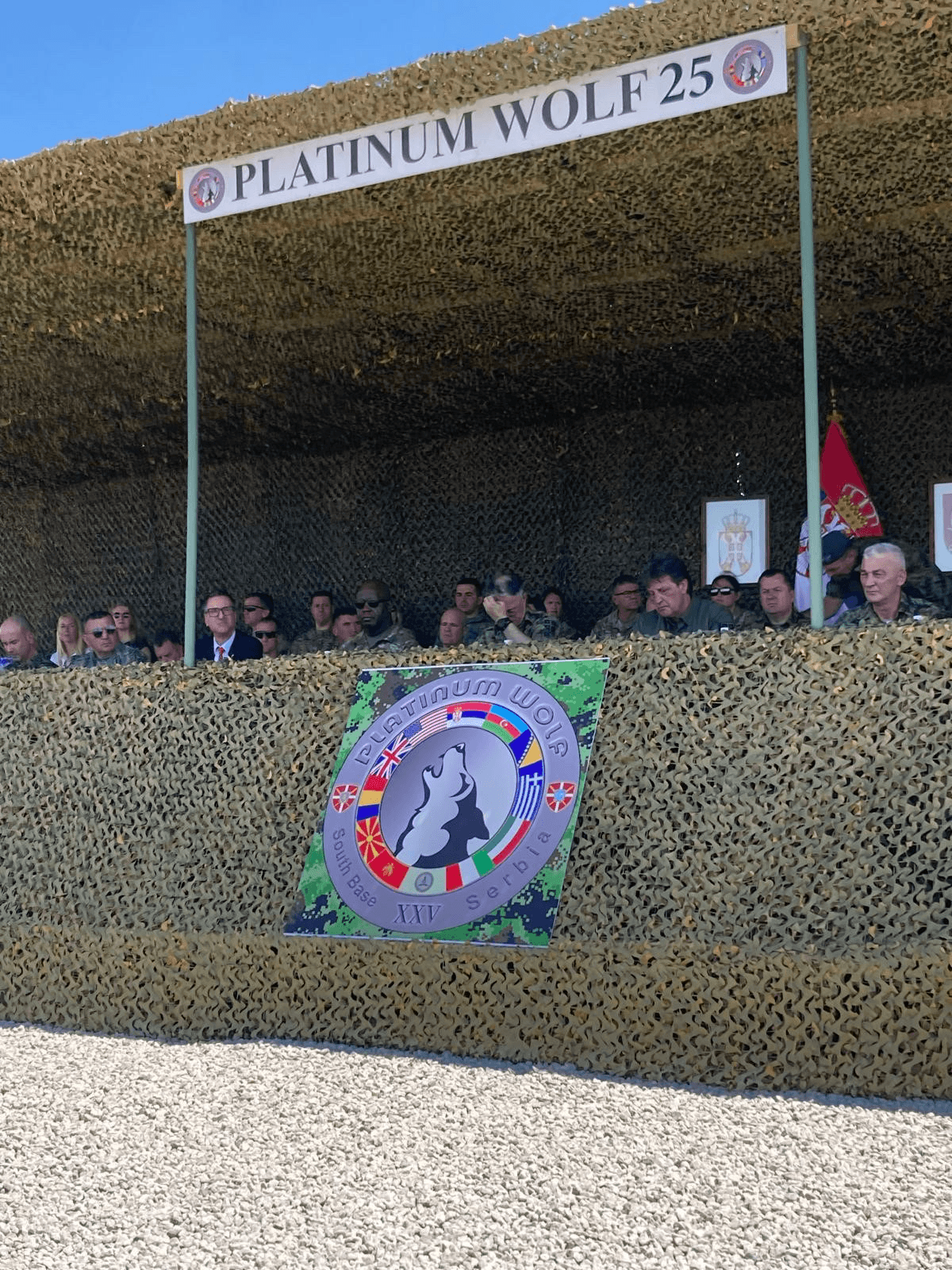
The “Platinum Wolf 25” multinational tactical exercise was held at South Base from June 12-27, 2025, near Bujanovac.
Alongside this, the Serbia–Ohio National Guard State Partnership Program, repeatedly described by both Serbian and US officials as a model and exceptionally successful partnership (out of 62 programs US forces have with countries worldwide, provides a permanent institutional backbone for training, exchanges, and interoperability. Taken together, the volume, continuity, and structure of these engagements demonstrate that Serbia’s real-world defense cooperation is overwhelmingly oriented toward Western partners, not Russia, positioning Serbia as a militarily neutral but practically aligned and strategically reliable contributor to regional security in line with US and Euro-Atlantic standards.
"I have the opportunity as the chief of the National Guard Bureau to see 62 partnerships around the world in all the combatant commands. The partnership between Serbia and Ohio is a relationship with a country who desperately wants to interact with the United States of America. So all that chemistry makes this one of the most outstanding partnerships that I've observed.” - Air Force Gen. Craig McKinley, the chief of the National Guard Bureau, 2010.
This movement toward Western integration in defence is reinforced by Serbia’s decision to purchase 12 French Rafale fighter jets, a €2.7 billion deal that modernises its air force with Western-built aircraft and signals a shift away from reliance on older Soviet systems. Serbia’s defence industry is also active commercially, with indirect ammunition sales to Ukraine officially reaching $800 million. Additionally, Serbia has become one of the few European exporters of ammunition to Israel, with exports in 2025 exceeding previous records (€55.5 million), and signing a major defence procurement deal with Israeli firm Elbit Systems, including the purchase of PULS artillery rocket systems and Hermes 900 reconnaissance drones in a contract valued at approximately $335 million in 2025. These actions underscore the growing commercial ties with Western defence markets.
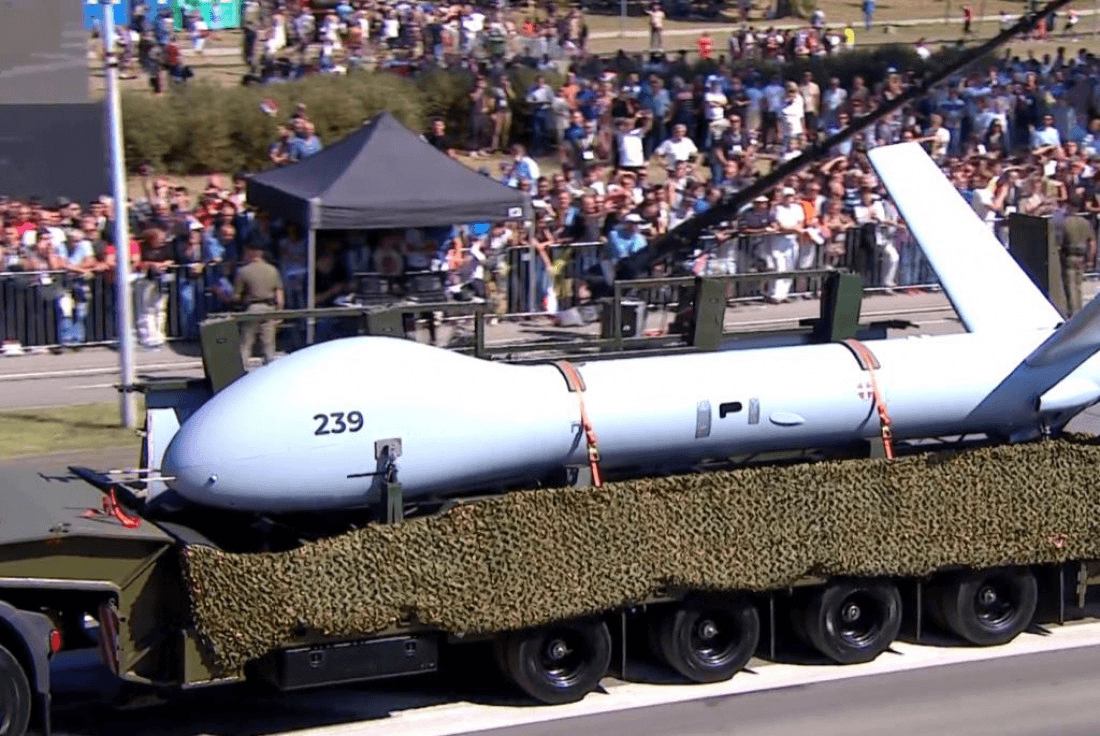
Israeli missile systems PULS and the Hermes 900 unmanned aerial vehicle were publicly displayed for the first time during the “Strength of Unity” major military parade in Belgrade (September 20, 2025).
Foreign Policy Alignment and Balance
The legacy “four pillars” doctrine (balancing EU, US, Russia, China) that guided Serbian diplomacy over the past decade is becoming untenable as Serbia moves toward EU membership and deeper Western integration. In a new era, Belgrade’s guiding principle should be Western orientation with selective balance: maintaining pragmatic ties with all major powers where possible, but clearly prioritizing alignment with the US and EU on core strategic matters. This shift is already underway. Since Russia’s war in Ukraine, Serbia’s once-intensive cooperation with Moscow and Beijing has visibly cooled on the international stage, with Serbia showing more restraint in UN voting and refraining from new strategic deals that might threaten European security interests. The writing is on the wall – the foundations of the old four-pillar approach are “incompatible with Serbia as an EU member,” necessitating “a new vision of Serbia’s relations with Russia and China, with clearly set red lines aligned with Serbia’s interests”.
Under this strategy, Serbia should affirm its commitment to EU integration as its top foreign policy goal. Joining the EU not only remains the long-term anchor of Serbia’s prosperity and democratic development, but it also complements US strategic aims in Europe. Notably, American policy has consistently supported the Western Balkans’ EU path, seeing EU enlargement as stabilizing. To convince skeptics within the EU of its readiness, Serbia must demonstrate greater alignment with EU foreign and security policy. This could involve gradually joining select EU sanctions or positions – for example, imposing symbolic sanctions on certain Russian entities to signal that Serbia will not actively undercut the Western response to aggression. It also means continuing domestic reforms in the rule of law and governance, since these are prerequisites for EU accession and are highlighted within the US-Serbia strategic dialogue as areas for cooperation. Brussels has recently intensified high-level engagement with Belgrade to expedite accession talks, and a strong Western-oriented foreign policy will address a key concern of EU members: that Serbia might otherwise be a “Trojan horse” for rival powers inside the Union.
Regarding China, Serbia should adopt a posture of cautious engagement. China has been an important investor in Serbian infrastructure and a partner in technology projects. Those economic ties need not be severed overnight. However, Serbia will “diversify its financing sources” and avoid dependence on any single lender. Future cooperation with Beijing should be limited to areas that do not threaten Serbia’s Western integration, for instance, non-sensitive infrastructure that adheres to transparency standards. In sectors critical to national security (telecommunications, defense, advanced technology), Serbia will “de-risk” Chinese influence, opting for Western alternatives or stringent vetting processes.
In terms of Russia, Serbia’s historical, religious, and cultural connections run deep, and Moscow’s backing on the Kosovo issue (through its UN Security Council veto) has been a pillar of Serbian diplomacy. However, Serbia can maintain a relationship with Russia only within well-defined bounds. The strategy dictates no new military cooperation with Russia (given international sanctions and the need to stay aligned with EU security), continued diversification away from Russian energy, and an insistence that any ties (in trade or culture) do not violate EU sanctions regimes.
Finally, Serbia will not abandon its ties with the wider world – in fact, a Western-aligned Serbia can be an even more effective bridge to the Global South. Thanks to the legacy of the Non-Aligned Movement, Serbia enjoys goodwill in many Asian, African, and Latin American countries. Rather than seeing this as contradictory to the US-aligned strategy, Serbia can leverage these global connections to foster cooperation with these countries and even serve as a channel for US outreach to those regions. For example, Serbia can share its development experiences, promote people-to-people exchanges, and advocate within international institutions in ways that complement Western diplomacy. This balanced diplomacy – increasing Western orientation while keeping a global perspective – enhances Serbia’s stature as an emerging middle player with unique strategic value.
Strategic Recommendations
To translate this strategy into action, the following key steps and initiatives are recommended for Serbian policymakers, in close coordination with American partners:
Institutionalize the US–Serbia Strategic Dialogue – Arranging and further developing it into a structured and results-oriented framework. This should include one high-level strategic meeting every six months, complemented by quarterly meetings of thematic working groups covering energy, security, defense, and economic cooperation. Clear timelines and benchmarks for implementing agreed objectives should be established from the outset, supported by a joint secretariat or monitoring mechanism tasked with tracking progress, coordinating across institutions, and ensuring sustained momentum and accountability.
Finalize and Implement Energy Diversification Projects – Serbia’s energy strategy should clearly prioritize diversification away from Russian dependence and move decisively toward multiple, secure supply routes. This means fully leveraging and expanding access to LNG via Alexandroupolis, increasing contracted volumes of Azerbaijani pipeline gas, and exploring additional gas corridors, including routes through Romania, alongside the option of US LNG imports as market conditions allow. In parallel, Serbia should continue opening its renewables sector to US firms bidding on wind, solar, and battery storage projects under transparent, competitive rules, while upgrading the grid to accommodate these sources.
Nuclear Cooperation - If the conditions in the future allow, cooperation with US partners or other Western partners should also be pursued in that segment (Conventional reactors, SMRs or nuclear fuel), ensuring alignment with Western standards and reinforcing Serbia’s overall energy security and strategic orientation.
Launch a Cybersecurity and Counter-Disinformation Initiative – Building on the already solid and largely positive tech cooperation between Serbia and the United States, the next step should be to deepen cybersecurity and resilience partnerships. In cooperation with US agencies, Serbia can strengthen the protection of its critical digital infrastructure through joint training, shared expertise, and standardized security assessments aligned with US best practices. This could include creating a Cyber Defense Center of Excellence in Belgrade, training Serbian cybersecurity experts, and implementing US-recommended security audits of critical networks.
Enhance Defense Cooperation without Formal Alliances – Deepen military-to-military ties by increasing the number and scope of joint exercises, with a structured annual program focused on peacekeeping, engineering, humanitarian assistance, and other non-offensive missions. Training locations should rotate between Serbia and US bases in Europe, while the State Partnership Program can be expanded beyond the Ohio National Guard to include additional US units for specialized training, including cyber and medical capabilities. At the same time, Serbia should further invest in professional military education exchanges by sending officers to US courses and hosting US advisors within Serbian defense institutions, strengthening interoperability and long-term trust.
Align Foreign Policy Incrementally with the EU/US – Develop and publish Serbia’s first written Foreign Policy Strategy to clearly define its international alignment and reduce strategic ambiguity. The document should set clear red lines toward rival powers, outline alignment with EU and US positions where Serbian interests converge, and be communicated transparently to both domestic and international audiences. As confidence-building steps, Serbia can coordinate key UN positions with the US and EU and selectively align with sanctions regimes. Intensified engagement with members that support Serbia's EU membership, notably France, Italy, Poland, Hungary, Slovakia, the Czech Republic, Greece, Romania, Cyprus, etc., would strengthen political backing in Brussels, with the goal of securing a formal EU accession roadmap with measurable benchmarks by 2026.
Economic and Investment Partnership Plan – Serbia should leverage its momentum to attract transparent US investment in sectors where it already delivers results, notably ICT (10% of GDP, $4 billion exports to the US), infrastructure, clean energy, EVs, and healthcare. An annual US–Serbia Investment Forum can anchor this effort, pairing flagship projects in technology, renewables, and digital services with OECD-standard reforms that improve procurement, governance, and investor confidence. The objective is straightforward. Aim to replace opaque deals with high-quality US capital that strengthens Serbia’s economy, institutions, and long-term strategic alignment.
Public Diplomacy and Cultural Exchange – To sustain this strategic shift over the long term, Serbia should invest in people-to-people ties with the United States by expanding Fulbright and other scholarship programs, strengthening English-language education, and supporting American cultural centers in Serbia alongside Serbian cultural diplomacy in the US. Emphasizing shared historical figures such as Mihajlo Pupin, Nikola Tesla, and other notable Serbian-Americans highlights a deep, organic connection that goes beyond politics. These links reinforce mutual trust and anchor the partnership in a shared intellectual and cultural heritage.
US President’s visit to Belgrade – a symbolic but powerful gesture that would cement the new chapter in relations, given the fact that the last US president visited Belgrade in 1980, and President Trump has the highest US president approval rate in Europe, exactly in Serbia (59%).
Other Analysis

Read time:
15
min
Mar 5, 2026
text
Serbia’s Strategic Depth in Central Asia: A C5+1+ Approach
How Serbia’s partnerships with Central Asia boost energy security, trade, and connectivity

Read time:
5
min
Feb 26, 2026
text
From the Non-Aligned Movement to a Future Alliance Between Belgrade and New Delhi in the New Global Power Game
India’s westward pivot and Serbia’s strategic bet on a deeper economic partnership
Read time:
15
min
Feb 19, 2026
text
The Middle Corridor and Serbia’s Place in Europe–Asia Trade
Serbia’s strategic role in the Middle Corridor reshaping Europe–Asia trade through connectivity, resilience, and geopolitics