Tamara Ristić, Olga Isailović, Adrijana Miladinović, Dragana Drljača
The Basketball Court as Common Ground: The Serbian Soft Power Advantage
How the ongoing legacy of Serbian basketball talent can be an institutionalized agent of diplomacy

“Soft power is the ability to affect others to obtain the outcomes one wants through attraction and persuasion rather than coercion or payment.” — Joseph S. Nye Jr, American Political Scientist
Within the past century, modern nations have shifted diplomacy to encompass increasingly cultural policies and institutions, like the United States’ development of State Department-sponsored programs such as the Peace Corps and Fulbright Program, allowing U.S. citizens to travel abroad, as well as China’s global establishment of Confucius Institutes to promote the Chinese language and culture internationally. Governments worldwide exhibit an increased dedication to the mutually beneficial exchange of talent. Rather than imposing military or economic force to create alliances with other countries, cultivating admiration between domestic and international audiences is an additional aspect of the United States framework for so-called ‘soft power’, long entertaining international audiences with Hollywood films, jazz music, and “Voice of America” podcasts. The pastime of consuming foreign media anchors citizens’ demands for upholding the safety and guarantee of inbound representatives and products. Continuing a legacy of leisurely influence, the United States federal government has allocated an estimated $1.6 billion for hosting two international sporting events set to take place in the next 5 years: the 2026 FIFA World Cup and the 2028 Olympic and Paralympic Games. On a worldwide platform, sporting events are an inclusive means by which participants display and are rewarded for values like strength, teamwork, and pride as representatives of their country.
Among sports with an international viewership, basketball is estimated to be the second-most-viewed sport in the world, with an estimated 3.3 billion fans, behind football (soccer). Organizations like the International Basketball Federation (FIBA) host tournaments where players and officials from otherwise individual national federations can be unified by competition and shared knowledge of the sport. Yet, basketball stands out as a uniquely American sport, invented by Canadian-American physical education teacher James Naismith in 1891, and the American National Basketball Association (NBA) league programming accounts for 90% of world cross-border basketball viewership. Without the United States’ contributions to inventing and managing entities serving the international basketball community, cross-cultural viewership and participation would dwindle or cease to exist. American audiences also watch the NBA en masse— with a reported 87 million viewers having watched games throughout the 2025-26 season. Professional basketball resonates domestically with Americans because of its unique intersection with pop culture, university athletics, and the culture of amateur play.
In essence, teams in the NBA are becoming increasingly international, relying on foreign players, with all 30 teams in the league hosting at least one international player, with a record of 135 total non-Americans in the organization in the 2025-26 season. Beyond gaining recognition on behalf of their own nationality, athletes from abroad contribute significantly to the technique and leadership fundamental to professional basketball in the United States. Behind Canada, France, and Germany, Serbia is ranked fourth in the number of players born on its soil contracted with American teams in the NBA, with a total of 6 drafted players as of 2026. Serbian professional basketball players are role models not only for mastering strategy on the court, but also through press-documented displays of sportsmanship and humility. Since the 1990s, players like the Los Angeles Lakers’ Vlade Divac made history as the earliest Europeans in the league, while in recent years, since 2021, the Denver Nuggets’ Nikola Jokić has won the Most Valuable Player award several times, among only 9 other players total to have earned the same distinction more than 3 times. As recruits from a nation with a smaller population in comparison to the United States or France, athletes from Serbia are disproportionate contributors to the scoring, assists, and additional metrics dominating leaderboards. Within the context of geopolitical challenges, like the breakup of Yugoslavia in the 1990s and the subsequent strive for Serbian visibility in its diasporic population, Divac and Jokić are respectively recognized for promoting American dialogue around Serbian achievement. Simultaneously independent and representative, players possess the agency to contribute to compromise beyond hard power dictating the relationship between governing bodies of both their host nation and country of origin.
The Serbian School: A Quiet Revolution in Global Basketball
Serbia is most often defined by its geography, a crossroads between East and West. Yet geography explains only where Serbia sits, while basketball reveals what it builds. Over three decades, a country of roughly seven million has become one of the sport's most reliable exporters of talent and ideas. The most pivotal point for Washington is not that Serbian players reached the world's most American game, but that they reshaped how it is being played. The export has been conceptual, rather than physical, advancing across three generations from the passing big man to the long-range marksman to the playmaking center who now anchors the league's template. In essence, Serbia did not join global basketball. It helped redesign it.
The lineage begins with Pete “Pistol” Maravich, the son of Serbian immigrants, who still holds the NCAA’s all-time scoring record at 44.2 points per game, set in an era without a three-point line or a shot clock. His ball handling and unexpected passing angles were unlike anything the sport had seen, and that creativity became embedded in how Americans imagined the game could be played. He was the first player of Serbian descent to reach an All-Star Game, doing so five times.
The homeland thread followed soon after. ESPN described Vlade Divac as “Europe’s first successful long-term export to the NBA,” a slick passing center whose court vision was uncharacteristic for his size. Divac set a blueprint that Dirk Nowitzki and, eventually, Nikola Jokić would follow. Peja Stojaković extended the legacy to the perimeter, twice winning the league’s three-point contest and helping pioneer the spacing-driven offense that now dominates the modern NBA. Jokić, a three-time MVP, is the culmination of this arc, and his contemporary reach is addressed in the section that follows.
Read together, these careers amount to soft power by another name. A country of roughly seven million has supplied the world’s premier league with a credible, repeatable model of how the game should be played. That is an influence of a kind no cultural attaché or export budget can manufacture.
Yugoslav Roots: The Institutional Legacy Behind the Talent
This output was not accidental. Serbian basketball rests on an institutional legacy inherited from Yugoslavia, whose national teams won Olympic and world championship medals across the 1960s, 1970s, and 1980s, and whose coaching culture treated the sport as a school of movement and passing rather than athleticism alone. Clubs such as Partizan and Crvena Zvezda (Red Star), and more recently academies like Mega, have functioned as a continuous pipeline, developing and exporting talent decade after decade, even through the upheaval of the country’s breakup.
That continuity is what gives Serbia's standing in the sport its credibility. At least 34 players from Serbia have reached the NBA, five of them active in the 2025 to 2026 season, with the breakthrough coming when Vlade Divac entered the league in 1989. The pull now reinforces itself: visiting Belgrade for the league's Basketball Without Borders camp, Hall of Fame coach Gregg Popovich, himself the son of a Serbian father, judged the country's emerging talent strong and predicted that “there will be many, many more from this area who will be in the NBA.” The throughline is structural, not the product of a single fortunate generation.
Serbian players in the NBA

Jokić as the Crown of Serbian Soft Power
Nikola Jokić represents Serbia's strongest contemporary soft power asset in the United States. A three-time NBA Most Valuable Player (MVP), NBA champion, and NBA Finals MVP, he has become one of the most recognizable international athletes competing in America's most influential basketball league. Unlike traditional public diplomacy initiatives that rely on government funding and strategic communication, Jokić's international reputation has emerged organically through sustained athletic excellence.
Across the NBA's social and digital platforms during the 2025–26 regular season, Jokić generated 1.23 billion views, making him the fifth most-viewed player in the league worldwide, behind only LeBron James, Victor Wembanyama, Luka Dončić, and Stephen Curry. In an era where digital attention increasingly shapes international perceptions, this represents a level of global exposure that many governments spend years—and millions of dollars—attempting to achieve through official cultural diplomacy campaigns.
What this signals is that Serbia possesses a soft power asset whose influence extends well beyond basketball. While there is no comprehensive dataset measuring exactly how many Americans have learned about Serbia because of Jokić, his extraordinary visibility serves as a compelling proxy for international recognition. Every nationally televised NBA game, viral highlight, podcast discussion, or social media clip featuring Jokić introduces millions of viewers to Serbia in a positive, familiar, and non-political context. For many Americans, particularly younger basketball audiences, Serbia is increasingly recognized not through the lens of the Balkan conflicts of the 1990s, but as the home of one of the NBA's most respected and accomplished players. In this sense, Jokić has become an accessible entry point to Serbian identity.
This shift is particularly significant because of the NBA's broader transformation into a global cultural institution. Today's league is increasingly defined by international stars whose popularity transcends national borders and whose identities become intertwined with the countries they represent. Young American fans now grow up following Nikola Jokić, Luka Dončić, Victor Wembanyama, and Giannis Antetokounmpo as naturally as previous generations followed Michael Jordan or Kobe Bryant. As these athletes become household names, so too do the countries, cultures, and basketball traditions from which they come. Serbia's comparative advantage therefore lies not in broad visibility across every segment of American society, but in concentrated credibility within one of the United States' most influential cultural industries.
Elite athletes are increasingly recognized as informal ambassadors whose influence extends well beyond sport, shaping international perceptions, strengthening bilateral ties, and contributing to public diplomacy. Jokić exemplifies this dynamic. His international reputation has not been built through political messaging or state-sponsored campaigns, but through credibility earned on the court. American media consistently portray him as intelligent, humble, team-oriented, and authentic—qualities that gradually become associated not only with the player himself, but also with Serbia. In this way, sporting excellence contributes to reshaping perceptions of a country through attraction rather than political persuasion.
From a policy perspective, this visibility represents an underutilized diplomatic resource. Jokić's popularity alone cannot transform U.S.–Serbia relations, nor has he sought to play the role of a diplomatic representative. Nevertheless, his global recognition creates favorable conditions for expanding educational exchanges, university partnerships, youth sports cooperation, cultural initiatives, and diaspora engagement. Positive familiarity lowers barriers to cooperation. Serbia already possesses what many countries seek to build—a globally recognized public figure whose reputation enjoys broad credibility among American audiences. The policy challenge, therefore, is not creating international visibility, but institutionalizing it through sustained cultural, educational, and people-to-people cooperation.
The Limits of Celebrity Diplomacy
Nonetheless, limits exist. Basketball can help instill familiarity, admiration, and goodwill between the United States and Serbia, but it alone cannot resolve harder political questions in this relationship. The central challenge is not whether Serbian basketball has visibility and recognition in the United States – players like Divac, Maravich, and Jokić certainly contribute to this – but whether this visibility can be converted into a durable channel of public diplomacy. Two obstacles prevent this.
The first obstacle is institutional fragmentation. Serbian players, coaches, clubs, U.S. universities, NBA-linked networks, and diplomatic institutions operate in overlapping but largely separate spaces. Moments of attention around Serbian basketball players are episodic, during specific events, but rarely translated into sustained educational, cultural, or diplomatic programming. In essence, Serbia possesses a sporting capital abroad but no institutional machinery to use it strategically. The second obstacle is directly related: the American sports landscape is crowded. Serbia’s advantage is not mass visibility across all American audiences, but concentrated credibility inside one of America’s most culturally resonant sports. Serbia should use basketball as an entry point through which to widen cultural exchange, diaspora engagement, and institutional trust.
At the same time, celebrity status should not be mistaken for diplomatic influence. Sports fame does not automatically translate into policy leverage. Public attention generated by sporting success is inherently temporary and often dependent on continued athletic achievement. Moreover, players like Nikola Jokić have consistently maintained an apolitical public image and have shown little interest in serving as a formal representative of Serbian foreign policy. Without institutions capable of connecting basketball to educational exchanges, cultural programming, academic cooperation, and diaspora initiatives, Serbia risks allowing this unprecedented international visibility to remain symbolic rather than strategic. Players’ global popularity is therefore best understood as an opportunity—not a diplomatic outcome in itself. Whether this visibility becomes durable soft power ultimately depends on the ability of Serbian and American institutions to translate public admiration into long-term relationships and sustained cooperation.
Recommendations
To fully capitalize on basketball as a valuable soft power tool, the following actions can be implemented:
Establish a U.S.-Serbia Basketball Diplomacy Working Group: Serbia should create a dedicated basketball diplomacy working group under the existing Strategic Dialogue with the United States, bringing together the Ministry of Foreign Affairs, the Ministry of Sports, the Serbian Basketball Federation, the U.S. Embassy in Belgrade, as well as relevant diaspora organizations. Its mission should be practical and focused on identifying annual exchange opportunities for successful U.S. and Serbian basketball players, coordinating with professional and collegiate basketball institutions, and turning isolated sporting visibility into a repeatable diplomatic channel. The outcome is not a substitute for formal diplomacy but a durable cultural mechanism that opens a platform for trust-building between the two nations.
Launch a Bilateral Basketball Exchange Program: Serbia and the United States should create a two-way basketball exchange program connecting Serbian clubs, academies, coaches, analysts, and basketball administrators with U.S. universities, NBA-affiliated programs, NCAA networks, and youth development systems, particularly in states with visible Serbian communities or strong basketball cultures. It should include fellowships for coaches and administrators and scholarship pathways for student-athletes co-funded by Serbian and American institutions, private sponsors, and U.S.-based Serbian diaspora donors, with return commitments that bring knowledge back into both Serbian and American clubs and colleges. The purpose of the program would be to convert Serbia’s existing basketball reputation into a structured talent pipeline, strengthening domestic capacity while making Serbian expertise more visible inside American sports institutions that benefit from gaining access to Serbia’s player-development model and young talent.
Anchor Basketball Diplomacy in Wider Transatlantic Partnership: Serbia should engage with the U.S. Embassy, State Department cultural diplomacy programs, Serbian-American diaspora, and other relevant basketball institutions to strategically place its own sport program within a broader Western framework. This could take the form of a rotating annual basketball diplomacy forum, university agreements, sponsorship channels, and embassy-backed public diplomacy in Belgrade, Washington, and major Serbian-American communities, such as those in Chicago and Denver. The expected result is moving Serbian basketball beyond its symbolic status and strategically anchoring it within a wider U.S.-Serbia cooperation that links sport, education, culture, and long-term people-to-people diplomacy.
Other Analysis

Read time:
20
min
Sep 17, 2026
text
Why the USA and Serbia Need a Tax Treaty?
How a tax treaty and totalization agreement can deepen the growing U.S.–Serbia economic partnership.
Read time:
45
min
Sep 10, 2026
text
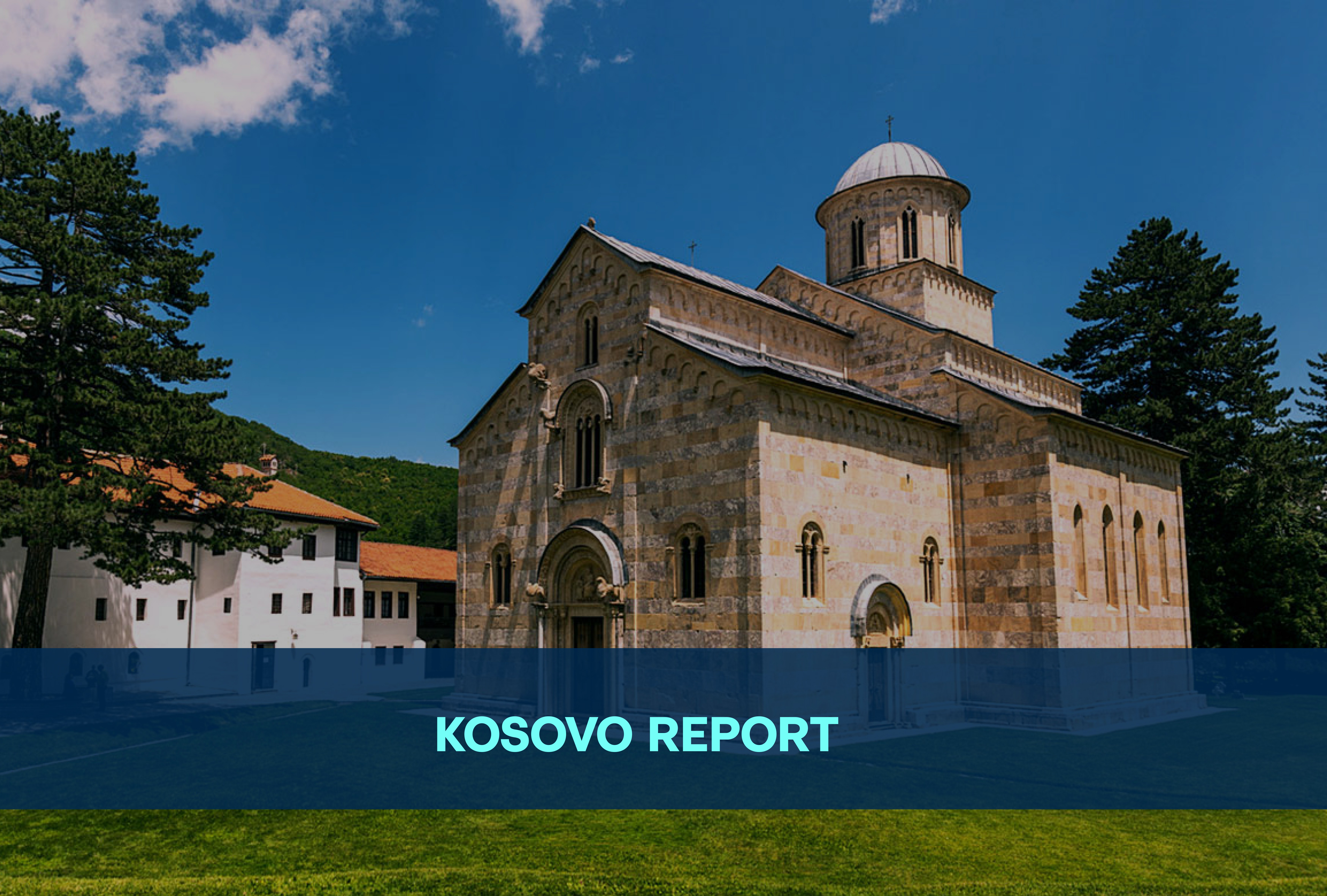
Silence Is Not Safety: Rights Before Politics in Kosovo
Rights Before Politics: Protecting the Serbian Community and Religious Heritage in Kosovo

Read time:
4
min
Aug 25, 2026
text
Membership Without Benefits: Serbia’s Place in WAICO
Why Serbia’s WAICO membership creates alignment risks, with no clear economic or strategic benefits.