Vuk Velebit, Aleksa Jovanović, Petar Ivić
The Students’ Victory and Serbia’s Foreign Policy: Building on the Momentum in U.S.–Serbia Relations
Serbia’s political transition opens new opportunities to strengthen strategic ties with the U.S.

Key findings
▪ The Students’ List victory is the first change of government through elections since 2012. Record turnout and a swift concession give the new majority a legitimacy that strengthens Serbia’s hand in both Washington and Brussels.
▪ The central foreign policy question is whether the “four pillars” policy will continue. The Pupin Initiative has long argued that it is unsustainable in today’s geopolitical circumstances; this is the moment to invest even more in relations with the United States.
▪ United States: the new majority inherits a newly launched Strategic Dialogue, and the State Department has already signalled that it wants to build on that momentum. As congressional criticism over the rule of law fades, the partnership can gain firm bipartisan backing.
▪ European Union: Brussels has welcomed the result, and unblocking the accession path is realistic but conditional. Non-alignment with EU sanctions on Russia remains the main open question.
▪ Russia and China: military neutrality and the refusal to sanction Russia remain, but the exit of Russian capital from NIS and the publication of state contracts point to more limited and transparent cooperation. Cooperation with China in high technology and AI will be the most sensitive test for the partnership with the U.S.
▪ The first concrete test comes immediately: OFAC’s operating licence for NIS expires on 30 October.
1. A political earthquake with foreign policy consequences
In the snap parliamentary elections of 25 October 2026, the “Students’ List – Students Are Winning” won, according to preliminary results of the Republic Electoral Commission, around 52 percent of the vote, more than 2.2 million ballots, with turnout of nearly 69 percent. The “Aleksandar Vučić – United Serbia” list received around 39.2 percent. According to the results, the new majority will hold 141 of 250 seats and will be able to form a government without coalition partners. Aleksandar Vučić, who resigned as President of the Republic in late September to run for prime minister, conceded within two hours of polls closing.
This is not merely a change of government; it closes the political order that has defined Serbia since 2012. For foreign policy, however, the key question is whether the new government will continue the so-called “four pillars” policy – balancing between the European Union, the United States, Russia and China. In previous years, the Pupin Initiative has been critical of this approach, which is not sustainable in today’s geopolitical circumstances, where great-power rivalry increasingly demands clear choices. The change of government is the moment to work even more intensively on relations with the United States.
2. What the foreign policy program says – and what it leaves unsaid
The Students’ List program defines foreign policy through a set of principles: preserving sovereignty and territorial integrity, respect for human and minority rights, economic development, transparency, peaceful resolution of disputes, and military neutrality. In late September, the list further announced that Serbia would maintain its principled position of not imposing restrictive measures on the Russian Federation.
The list’s leader, cardiologist and professor Ilija Srdanović, stressed during the campaign that foreign policy is not currently the focus; domestic order is – the rule of law, the fight against corruption and organised crime, and media freedom. He described Kosovo as an integral part of Serbia under the Constitution and pledged that Kosovo Serbs would not be abandoned. He did not reject European integration. At the same time, he emphasised that foreign policy would be conducted by the Government, in line with the Constitution, rather than by one individual.
This is a “reforms first” foreign policy. The program has three important features. First, continuity on the most sensitive issues (Kosovo, Russia sanctions, military neutrality) – a conscious choice to keep foreign policy out of the campaign and deny opponents the “foreign project” narrative. Second, institutionalisation: although the Constitution entrusts the Government with conducting state policy, over the past decade foreign policy was in practice run from the Presidency, with the Ministry of Foreign Affairs and the National Assembly in a secondary role; the new majority pledges to return it to the remit of the Government and the National Assembly. Third, transparency: the commitment to publish all of the state’s commercial contracts with foreign and domestic investors. It is these last two features, not declarations, that will most change how Serbia’s Western partners see it.
3. Relations with the U.S.: preserve the Strategic Dialogue, depoliticise the partnership
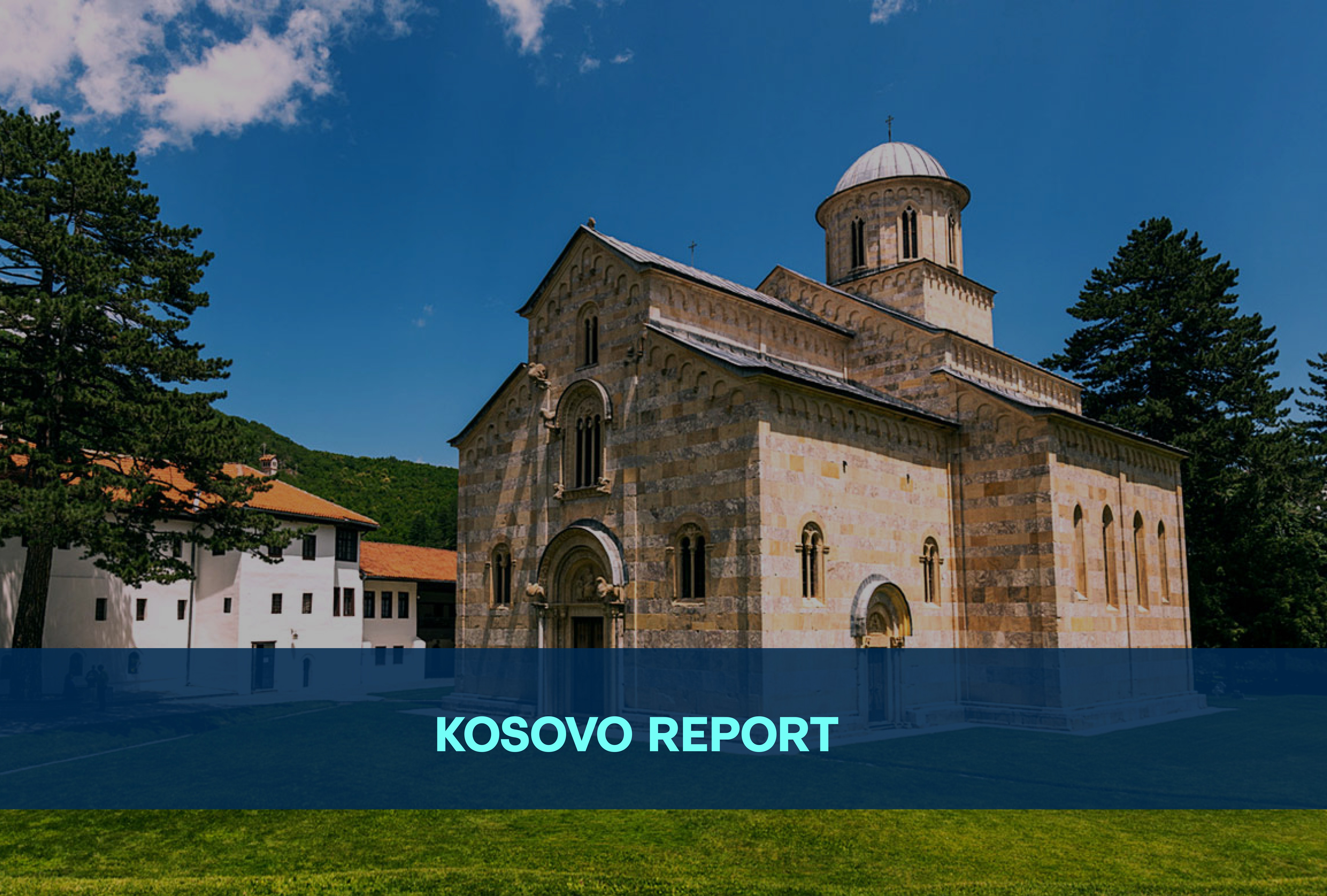
The U.S.–Serbia Strategic Dialogue, launched in Washington on 17 July 2026 by Secretary of State Marco Rubio and Foreign Minister Marko Đurić, raised relations between the two countries to the level of an institutionalised strategic dialogue for the first time in history. The dialogue covers energy, investment, emerging technologies and regional stability, and in Washington the Serbian delegation also raised the security of Serbs in Kosovo, including the Visoki Dečani Monastery. This is an achievement of the state, not of a single party, and it must survive the change of government. In the American system, partnerships last longer when they rest on institutions rather than on personal channels.
There is a real risk, too. On election night, Vučić partly blamed his defeat on an “American deep state” and on opponents of President Trump’s policies. The aim of that narrative is to cast the new government as a project of the current U.S. administration’s domestic adversaries. The White House did not react immediately. However, the State Department, in a statement to Insajder, said Washington looks forward to further developing its partnership with Serbia and to working with the newly elected members of the National Assembly, building on the momentum of the past year, including the launch of the Strategic Dialogue. This is an encouraging signal of institutional continuity, but the new government must still show quickly and unambiguously that it is a partner of the United States as a state – of the administration and of Congress, of Republicans and Democrats alike. In Washington, democracy and the rule of law are bipartisan values, not partisan ones.
The substance of the partnership is clear. In energy, NIS has operated under U.S. sanctions since October 2025, and both its operating licence and the licence for talks on selling the Russian stake to Hungary’s MOL expire on 30 October; according to Forbes Serbia, those talks ran into serious difficulties in early October. In February, Serbia also took part in the Transatlantic Gas Security Summit. In investment, published contracts, independent courts and predictable rules are a precondition for serious American capital. In defence, the two-decade partnership between the Serbian Armed Forces and the Ohio National Guard shows that military neutrality and cooperation with the U.S. are not in contradiction. In education and technology, the generation that drove this change is a natural bridge to American universities and companies.
4. The European Union: unblocking is possible, but not automatic
Since the end of 2021, Serbia has not opened a single new cluster in its EU negotiations. In July 2026, the European Commission sought to open Cluster 3, but eight member states blocked it – the Netherlands, Belgium, Croatia, Bulgaria, Sweden, Finland, Estonia and Lithuania – citing rule-of-law shortcomings and non-alignment with EU sanctions on Russia. The same month, the European Parliament adopted a resolution tying Serbia’s progress both to alignment with sanctions and to measurable progress on the fundamentals.
Brussels’ reaction to the election was swift and warm. European Council President António Costa and Commission President Ursula von der Leyen said they stood ready to support reforms on the rule of law, media freedom and anti-corruption and to advance Serbia’s European future together. Commissioner Kos said the EU’s door is open, and Hungarian Prime Minister Péter Magyar was among the first to congratulate the winners.
The ****blockage of Serbia’s EU path had two causes. The first – the rule of law – the new government can remove within months, and that is precisely its mandate. The second – alignment with the EU’s Common Foreign and Security Policy – runs counter to the list’s program. The realistic scenario is therefore partial unblocking: opening Cluster 3 during 2027 is achievable if reforms are fast and visible, while full momentum in the negotiations will require gradually increasing alignment with EU foreign policy. This is not a reason for pessimism, but for a clear plan.
5. Russia and China: limited, transparent, interest-based cooperation
The Students’ List does not announce a break with either Moscow or Beijing: military neutrality and the policy of not imposing sanctions remain. Nevertheless, several factors suggest cooperation will stay at a limited level. The exit of Russian capital from NIS, a condition for the survival of the country’s only refinery, removes Russia’s most significant lever in the Serbian economy. The obligation to publish all of the state’s commercial contracts will subject arrangements with Chinese investors to public scrutiny and domestic law. Finally, a policy guided by citizens’ interests rather than leaders’ personal relationships naturally narrows the room for opaque strategic dependencies. The aim is not rupture, but cooperation without secret contracts and without dependencies that jeopardise relations with Serbia’s most important partners.
6. Pupin Initiative recommendations
Based on this analysis, the Pupin Initiative recommends that the new government take the following steps:
1. Adopt a comprehensive foreign policy strategy. Serbia should develop a long-term foreign policy strategy that reflects the changing geopolitical environment, clearly defines its national interests, and establishes priorities in relations with key international partners. This process should include a broad public debate on the continued relevance of the traditional “four pillars” policy and the need to establish a clearer hierarchy of Serbia’s strategic partnerships, including its relationship with the United States.
2. Confirm the continuity of the Strategic Dialogue. In the first days of its mandate, send Secretary Rubio a message confirming the continuation of the dialogue and propose a date for the second round in early 2027, with concrete working groups on energy, investment and technology.
3. Resolve the NIS issue urgently. Immediately establish a technical channel with OFAC and the State Department, secure an extension of the licence, and actively support the full exit of Russian capital, while protecting the state’s stake and market supply.
4. Build a bipartisan approach to Congress. Congress shapes U.S. policy toward Serbia independently of the administration: it legislates on sanctions, approves funding and largely determines how Serbia is perceived in Washington. Partnerships that rest on the support of both parties in both chambers survive changes of administration. The new government should therefore engage Republican and Democratic members alike, systematically and continuously, and not only in times of crisis.
5. Depoliticise the relationship with Washington. Publicly and clearly reject the “deep state” narrative, establish direct contacts with the White House, and avoid any alignment with internal U.S. political divisions.
6. Advance Đerdap 3 and energy diversification. Move forward with the Đerdap 3 pumped-storage hydropower plant (2,400 MW, around €2.63 billion), for which the U.S. Embassy published a call for American companies under the intergovernmental agreement between Serbia and the United States, and work with U.S. partners to further diversify the sources and routes of Serbia’s gas and oil supply.
7. Preserve and expand defence cooperation. Reaffirm the partnership with the Ohio National Guard and cooperation within the Partnership for Peace as proof that military neutrality is compatible with close cooperation with the U.S.
8. Deepen cooperation in artificial intelligence and emerging technologies. Make AI, semiconductors and secure digital infrastructure a dedicated track of the Strategic Dialogue. At the same time, Serbia must openly assess how its high-tech cooperation with China – including the AI memorandum signed in Beijing in May 2026 and membership in the Shanghai-based World AI Cooperation Organization – affects its partnership with the U.S., which has urged Serbia to rely on trusted AI suppliers, and decide how to manage that challenge.
9. Engage the young generation and the diaspora. Expand exchanges, scholarships and university cooperation with the U.S.
10. Build a lasting national consensus on partnership with the United States. Cooperation with the U.S. should continue to develop regardless of political changes, with the support of government and opposition, business, academia and the diaspora. The Pupin Initiative will remain a strong partner in that effort.
Other Analysis
Read time:
7
min
Oct 27, 2026
text
The Students’ Victory and Serbia’s Foreign Policy: Building on the Momentum in U.S.–Serbia Relations
Serbia’s political transition opens new opportunities to strengthen strategic ties with the U.S.

Read time:
20
min
Oct 25, 2026
text
Why the USA and Serbia Need a Tax Treaty?
How a tax treaty and totalization agreement can deepen the growing U.S.–Serbia economic partnership.
Read time:
45
min
Sep 10, 2026
text
Silence Is Not Safety: Rights Before Politics in Kosovo
Rights Before Politics: Protecting the Serbian Community and Religious Heritage in Kosovo