Ana Antić, Sara Pavlović, Sara Petijević - Pupin Fellows 2025
Beacon of Ambition: Serbia’s Proactive Role in a Recalibrated World
How to leverage tech innovation, and global partnerships—especially with the US—to become a strategic mediator and innovation hub.

Introduction
An insider academic word of international relations is without question multipolarity, which feels like a bustling marketplace- rich, complex, filled with different spices, each adding its own energy. The notion deeply depends on various interpretations of leaders; however, while many discussions have tried to shape the thoughts around its grounds, is the world multipolar, or will it ever be? It certainly has entered the phase of multipolarization.
Recent trends show that the United States is no longer a ruling hegemon and cannot force you to do things by a phone call as it used to, yet it is still the most powerful country on the scene. Despite all the talk of American dysfunction, the reality is quite different. Those who blame the decades of stagnation on US policies definitely could not say that they would want to switch places with another country, an economy almost twice as large as the EU, and regarding hard and soft power, it is also in an inevitably great position. Some are debating that it is possible to see the difference between US influence following the end of the Cold War and today, and it is correct. It ended the majority of wars in that period, and today, the old “babysitter” faces many competitors who are pursuing their interests. So yes, there is a difference, but how can there not be? The beauty of this great transatlantic country is that it can reinvent itself in a recalibrated world, but it is not the only country capable of it.
The story of 2025 is not solely about the US. Other countries have risen and are browsing for their new strategy. Serbia, too, is paving its way into the multipolar arena, transforming into a proactive player on the grand chessboard. Many wonder how a small country in the Western Balkans can show its leverage in this order, and the answer lies in the people, talents, and new initiatives. In our opinion, Serbia needs to position the pillars of its strategic presence on the scene, one that contains several elements, such as technological innovation, cultural diplomacy, but also addressing persistent challenges.
When we talk about country relations, people usually think of governments shaking hands, but they miss the not-so-invisible thread that connects them all: people. It's the ties between students, traders, travelers, and everyday people that shape a country's “vibe” more than any policy coming from the top. It is clear that the policymakers call the shots, yet when you sum up random encounters, an old person telling you something on the street or sharing a conversation with someone you admire, especially today when everything is available online, this phrase matters: You are who you surround yourself with. Looking at Serbia and the US, these bonds played a significant role in the history that these two countries shared. Starting from, of course, Mihajlo (Michael) Pupin, to intensify partnerships and medical projects.
Global Context
“The strategic momentum” is now. As post-WWII well-established political relations and world order are slowly changing with the rising tide of popularity of right-wing parties as opposed to traditional left, a country such as Serbia has a chance to ride the tide with its Four Pillars policy and working on its specific kind of “neutrality” in the age of polarization between global powers such as US-EU and their changing dynamic in bilateral dealing on current circumstances in the field of conflicts, as well as new global order forming with closer US-Russia relations with second Trump term with Trump willing to go against the “norm”.
Current global state with multiple escalating conflicts and a changing mind about war with a focus on humanitarian implications, mainly on civilians, could be the “moment” to overturn the negative point of view on Serbia’s history, in regards to recent couple of decades stemming from the surfacing conflicts from the 1980s until the 2000s, especially when it comes to the topic of Kosovo and the fate of also Serbian people from Kosovo.
Serbia’s credibility as a proactive actor depends on its ability to maintain consistency, build institutional capacity, and demonstrate long-term strategic thinking. It demonstrates Serbia's potential role, not only in the Balkan region but also between East and West, as a mediator while maintaining close relations with the US, EU, China, and Russia, as already seen in partnerships with China, with Serbia being its foremost trading partner in Central and Eastern Europe, while China holds the position of being Serbia’s key trading partner in Asia.
The current “neutrality” of Serbia is not only in refusing to impose sanctions on Russia while working with the United States and attending the Odessa Summit, but also in using it to improve strategic sectors by becoming a country for large powers to choose to nearshore in as a high-value hub for innovations and utilizing the great minds to improve the R&D center, mainly in American IT companies, German automotive and Chinese mineral industries etc. which is made possible further by Serbia’s network of free-trade agreements, including the EU, CEFTA, EFTA, and the Eurasian Economic Union with recent Free Trade Agreement with China also providing opportunities for companies looking to expand into Asian markets from a Serbian base which could be used to connect Western with Asian markets while still the mid-point being a European country.
A neutrality in this sense can be seen in being capable of maintaining, simultaneously, relations with countries that are either in incongruous relations, such as the US-EU, or changing from a historical standpoint, such as the US with Russia and China.
The Proactive Role of Serbia
With changing circumstances, while also looking at the history of Serbia, it is seen that it should be our future strategy to use our relations and increasing partnerships to slowly change from using foreign investments that are now in billions of US dollars to work on joint investments and plans to go from typical manufacturing hub for nearshoring such as Mexico to innovation hubs such as demonstrated in companies like Microsoft, NCR, and Databricks which prove the immense potential of highly-qualified work force in Serbia.
Serbia boasts a growing technology sector, complemented by a talented workforce. It provides great opportunities for US tech companies choosing to move their branches, especially in R&D, to one of the already existing tech hubs, in particular Belgrade, to serve as a demonstration to other foreign companies, considering the following areas would benefit most from Serbian R&D branches:
Industry / Focus Area | Why Serbia |
|---|---|
Automotive Software & Electronics | Bosch, ZF, Continental already base R&D teams here; skilled embedded software & electronics engineers |
Artificial Intelligence (AI) | Strategy for the development of Artificial Intelligence in the Republic of Serbia & R&D centers to support NLP, machine learning, and vision systems |
Fintech / SaaS | Strong cloud engineering + time zone + low operational costs |
High-Value Manufacturing (e.g., sensors, semiconductors, robotics) | Components for EVs, medical tech, and machinery with growing supply chains |
Cybersecurity / Telecom | Technical universities (ETF, FTN) and close NATO–EU ICT standards |
HealthTech / Bioinformatics | Research partnerships via universities and EU Horizon 2020/HE access via affiliation |
It is essential to decentralize and examine the strengths of all major cities. This approach should encompass not only R&D hubs but also the decentralization of strategic sectors, with the primary center located in the capital city.
City | Strengths for R&D |
|---|---|
Belgrade | Capital, university presence, administrative HQs, ICT clusters, Microsoft/NCR, access to political levers |
Novi Sad | University tech hub, Continental/Bosch R&D sites, top software engineers |
Nis | Eastern Serbia’s engineering base (electronics, microcontrollers, machine engineering) |
Kragujevac | Industrial legacy city, strong in automotive parts (FCA Serbia), university presence |
Although looking at the pros, it is needed to locate possible cons and find mitigation strategies.
Potential Challenge | Mitigation Strategy |
|---|---|
Skilled labor competition | Early recruitment & loyalty programs; link with academia |
Regulatory change (labor, tax) | Work through local legal firms & RAS channels |
Language/cultural integration | Use well-educated bi- and multilingual HR and project managers; offer onboarding for expats |
Political/geopolitical shifts | Serbia’s neutral foreign policy provides relative macro stability |
The main challenge to face is the termination of the Decree on Incentives for Newly Settled Individuals in Serbia, which offered various incentives to foreign companies. The termination of direct tax incentives signals a necessary evolution from conventional talent attraction to more nuanced forms of engagement, leading to the possible mitigation strategy to keep the focus on Serbia as a nearshoring innovation hub, which is to shift from foreign hires to staying with the mainly domestic workforce as a way to, while creating frameworks that could enable both American and Serbian experts to contribute in improving R&D and others sectors, still use it to proactively position Serbian minds and experts on a global level.
This shift allows Serbia to exercise influence through institutional relationships and knowledge networks rather than individual relocations, a more sustainable and less visible approach to building technological leverage. Serbia's strategic opportunity lies not in duplicating others’ efforts but in developing complementary mechanisms that operate at the intersection of technology and other sectors in science and innovation, and geopolitical positioning.
As a way to improve even more people and have an ever-improving workforce coming from Serbian students, it is well-recommended to focus on making new and improving old alliances between universities in Serbia with international ones, such as the Circle U alliance, where the University of Belgrade was chosen as one to host one of the summer schools in the program.
It is also good to use the rising world rank of subjects, especially in STEM, clinical medicine, and public health, to work on growing soft power, especially through partnered research with leading experts and becoming a “go-to” innovation hub.
Initiatives such as the Open Balkans could take advantage of Serbia-Hungary relations to focus as well on Serbia’s relations with other Eastern and Eastern European countries, for example, Bulgaria and Romania etc.
Whereas it is important to focus on improving strategic industries through partnerships, Serbia’s good relations with four global powers can be used to have a neutral meeting point with more “people-to-people” diplomacy and conferences, and forums like the Pupin Forum to connect the diplomatic world with industry, considering people as individuals are more likely to enter partnerships and be willing to work on improving relations which consequently leads to bilateral political relations with better potential to make it long-term by steadily going into agreements.
Conclusion
The US pivot toward interest-based, value-balanced partnerships, rather than ideological alignment, makes it possible for countries like Serbia to engage in nuanced diplomacy. This does not imply opportunism or the abandonment of principle, but rather the crafting of a more flexible, interest-driven foreign policy that reflects both global realities and national priorities. Serbia’s path forward must therefore be guided not by the historical political state of the world and its clear polarization, but by strategic clarity rooted in national interest and international engagement.
Moreover, Serbia must reconcile the dual expectations placed upon it by international actors while still abiding by its neutrality politics: to act as a regional stabilizer while also navigating its historical relationships and domestic political dynamics.
Strategic momentum is not simply about choosing sides, but about designing a sustainable role in an international system that no longer tolerates binary alignments. The future belongs to countries that can balance, not just survive, complexity. This analysis has shifted the conversation from whether Serbia can play a global role to how it should execute it.
If Serbia commits to long-term strategic planning, embraces reform not as conditionality but as sovereignty-enhancing, and builds coalitions grounded in mutual benefit, it can not only keep pace with global shifts but help shape them. In this sense, the metaphor - “beacon of ambition” is not merely symbolic, but also the beacon of our past to guide our future to try to transform our constraints into opportunities to “rise”.
Policy Recommendations
Address the potential of proactively using Serbia’s Four Pillars policy in being a mediator between the global powers in future multilateral and bilateral policy meetings.
Touching base with external and internal constraints, such as Kosovo, proactively while focusing on staying on the sidelines of global conflicts and mitigating our own.
Establish a US-Serbia Tech innovation partnership (To create a bilateral agreement between the US Department of Energy with Serbia’s Ministry of Education and Ministry of Science, Technological Development and Innovation) to ensure grants for partnered research, aid with mitigating any regulatory change, and connect the private with the public sector.
Launching annual innovation summits with the presence of strong US firms based in Serbia.
Develop joint specialized data zones concentrated on AI and biotech research.
Forming a neutral meeting point located in Serbia with more “people-to-people” diplomacy and conferences for multiple sectors, both IT and others, on an annual level, to connect the diplomatic world with industry.
Other Analysis

Read time:
20
min
Sep 17, 2026
text
Why the USA and Serbia Need a Tax Treaty?
How a tax treaty and totalization agreement can deepen the growing U.S.–Serbia economic partnership.
Read time:
45
min
Sep 10, 2026
text
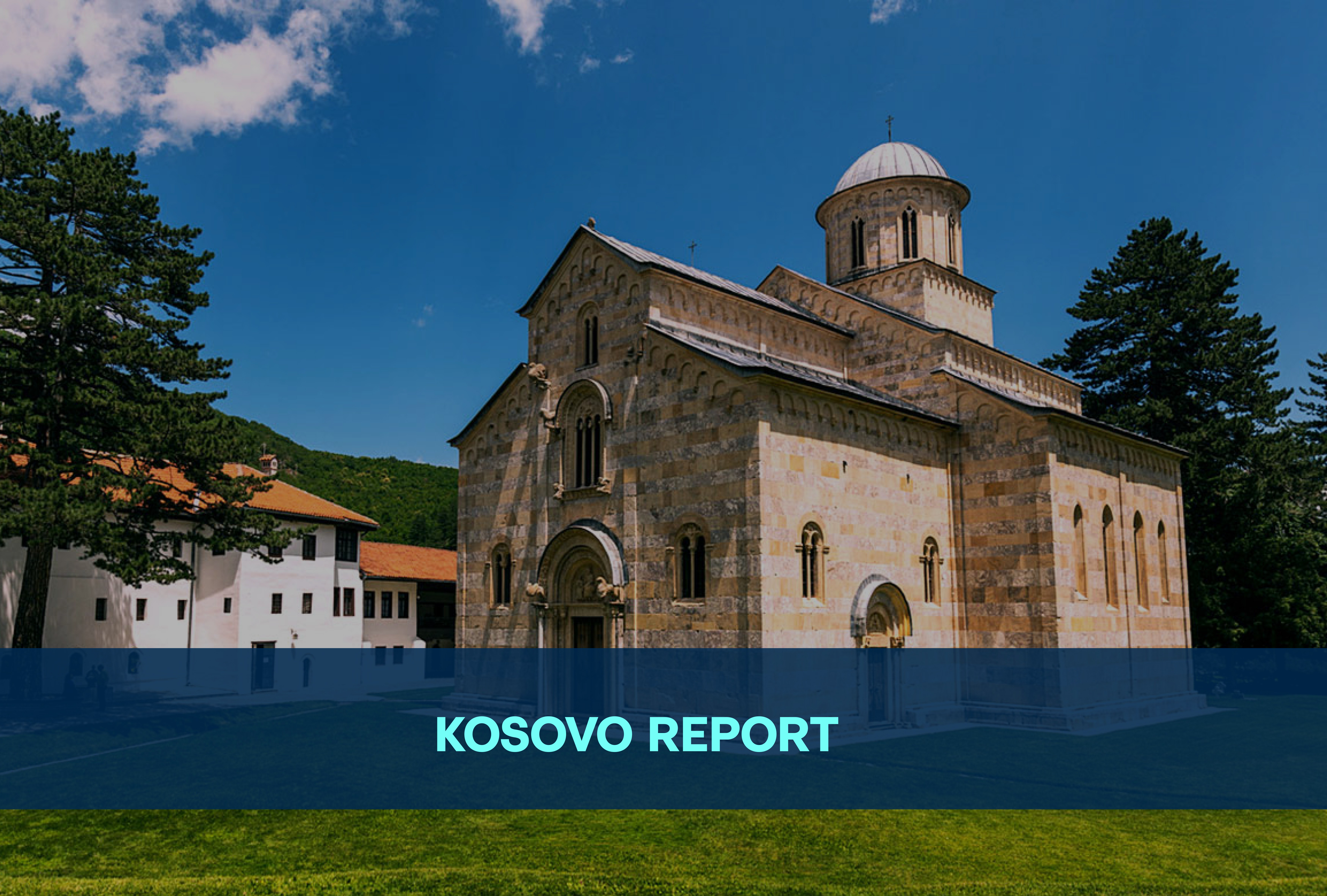
Silence Is Not Safety: Rights Before Politics in Kosovo
Rights Before Politics: Protecting the Serbian Community and Religious Heritage in Kosovo

Read time:
4
min
Aug 25, 2026
text
Membership Without Benefits: Serbia’s Place in WAICO
Why Serbia’s WAICO membership creates alignment risks, with no clear economic or strategic benefits.