Vuk Velebit
From the Non-Aligned Movement to a Future Alliance Between Belgrade and New Delhi in the New Global Power Game
India’s westward pivot and Serbia’s strategic bet on a deeper economic partnership
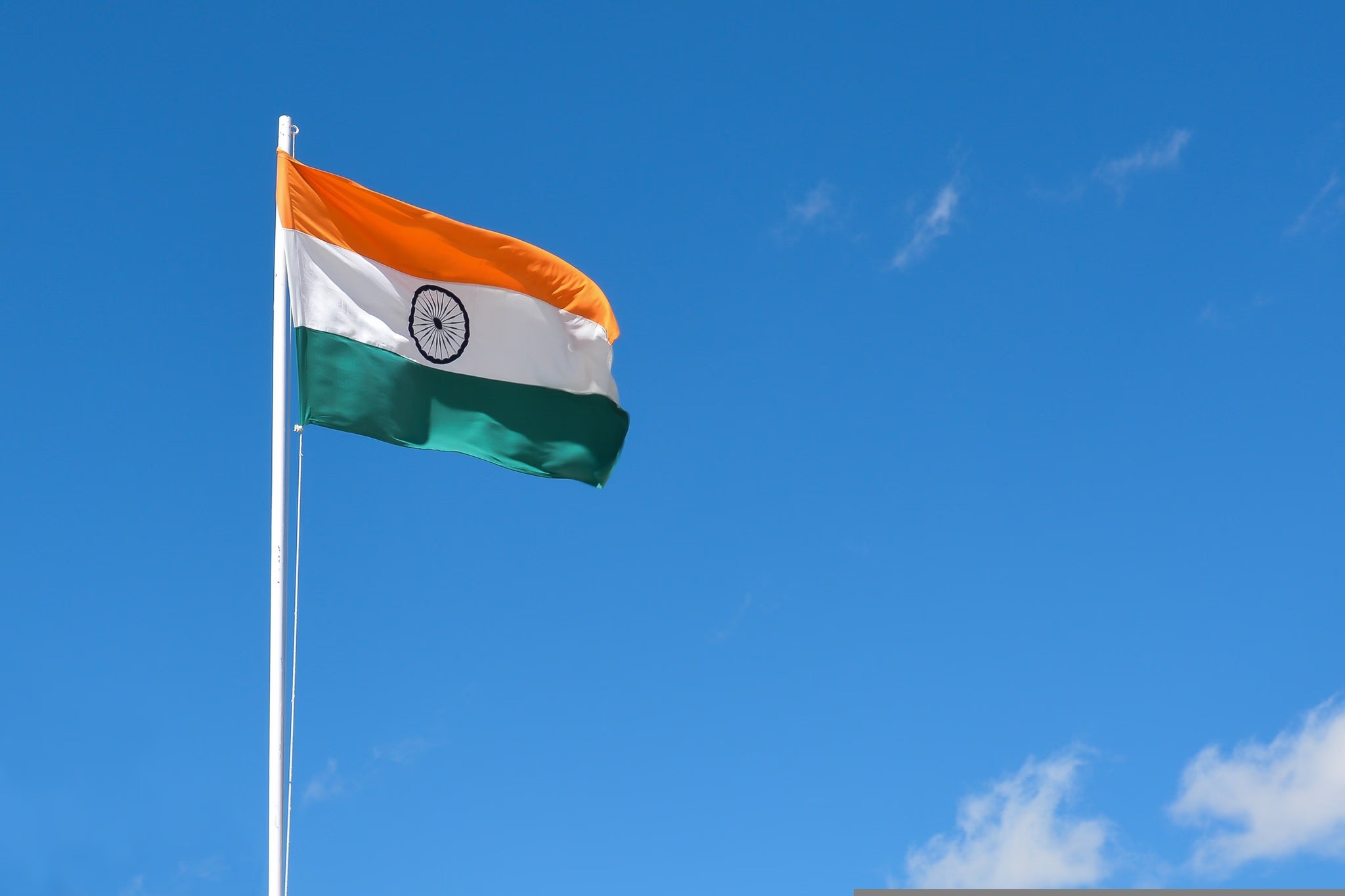
“Let her sleep, for when she wakes, she will shake the world…,” were the alleged words of Napoleon Bonaparte about China’s potential after his final military defeat in the devastating European power struggle of 1816. A prophetic observation indeed, yet had the cannon fire of his artillery batteries been quieter, Napoleon might also have turned his gaze toward what is today an equally powerful neighbor of China, India. For at present, it seems the world is witnessing the awakening of yet another sleeping giant.
India has recently taken center stage on numerous front pages and found itself in the global spotlight due to its offensive, but although this unfolds during a period of intense armed conflicts, it is, in fact, a peaceful and diplomatic one. India intends to harness its potential primarily in economic terms, and apparently in an honorable and less aggressive style, which clearly distinguishes it from its biggest neighbor, China.
What makes India unique is its openness to partnerships with all poles of power in today’s international system, even as those poles remain engaged in mutual rivalry. The United States views its partnership with India as part of a strategy to contain China, its greatest global rival. The European Union seeks access to the market of the world’s most populous country at a time of trade uncertainty. On the other hand, for Russia, India represents a valuable alternative market for energy exports after the severing of ties with Europe, while China itself cannot afford to sit idly by alongside such a significant neighbor.
Nevertheless, it appears that in 2026, India has decided to look more toward the West. Two key, interconnected initiatives are unfolding simultaneously. One is the elaboration of the IMEC corridor (India–Middle East–Europe) as an alternative to China’s Belt and Road Initiative, while the other is the long-awaited signing of a free trade agreement between India and the European Union after nineteen years of demanding negotiations. As the crowning achievement of this diplomatic momentum, India recently hosted an AI summit, further underscoring the strength of its forward-looking orientation.
Amid these global shifts, Serbia recognized the moment and chose to act diplomatically in a proactive manner. The visit of President Aleksandar Vučić to New Delhi and his meetings with Indian Prime Minister Narendra Modi, as well as with President Droupadi Murmu, mark the beginning of a new phase in bilateral relations. As emphasized by both sides, the meetings were substantive and focused on concrete cooperation rather than merely symbolic political messaging.
Particular emphasis in the talks was placed on strengthening trade and investment. Both sides highlighted significant opportunities for Serbian companies to enter the Indian market, as well as for Indian companies to invest in Serbia. Initial indicators of this trend are already visible, including relatively little-known Indian investments in industrial facilities in Serbia (Motherson, Cona Comstar, TAFE, etc.) and the interest of new technology start-ups in entering the domestic market.
Diplomatic gestures also play an important role in building trust. India has confirmed its participation in EXPO 2027 in Belgrade, while the Serbian president invited Prime Minister Modi to visit Serbia, which would represent a historic step forward in the political relations between the two countries. Vučić also wrote an article on artificial intelligence ahead of his visit and gave an interview to Indian CNN, which was duly acknowledged by the Indian prime minister. Such moves signal both sides’ readiness to elevate cooperation to a strategic level.
In practical terms, cooperation is being directed toward sectors with the greatest development potential. The most significant opportunity lies in joint ammunition production and the development of military-industrial cooperation, which would open space for joint investments and technology transfer. Serbia has a developed defense industry and has expressed readiness to transfer military technology and expand production on Indian territory. In parallel, discussions were held on cooperation in artificial intelligence, digital transformation, and the development of sovereign AI models, where Serbian and Indian experts could collaborate. Given that Serbia operates a well-developed data center in Kragujevac and will soon have a total of three supercomputers under its ownership, its position in this sector of cooperation is further strengthened.
Agriculture and fertilizer production represent another key area of connection. India, as an agricultural giant, and Serbia, with its strong agrarian sector, see room for joint projects that would contribute to a more stable supply and export growth. In addition, possibilities for cooperation in education, fintech, and tourism were considered, as well as the exchange of experts and labor. For these projects, a solution would need to be found following Serbia’s abolition of the visa-free regime for India (at the request of the European Union) in 2023. Despite this, the foundations of cooperation appear solid.
Added weight to this rapprochement comes from the fact that it is taking place alongside India’s stronger ties with Europe, as previously mentioned. In such an environment, Serbia seeks to position itself as a reliable partner and logistical hub for Indian companies seeking entry into the European market. Creating space for Indian experts and investors to come to Serbia, as well as improving conditions for Serbian companies operating in India, forms part of a broader, long-term strategy of economic connectivity.
This approach also rests on the political understanding that the two countries have been building for years. Serbia and India share similar positions on numerous global issues and consistently support one another in international forums, providing additional stability and predictability to their economic cooperation. This political foundation enables the partnership to be based not only on immediate interests, but also on trust developed through continuity in relations.
Data on economic cooperation confirm that these ties already have a solid material basis. Today, 252 Indian companies operate in Serbia, while as many as 3,200 Serbian firms import goods from India. At the same time, Serbian companies export a range of products to the Indian market, gradually diversifying and increasing the complexity of trade. Total trade between the two countries from January to September 2025 reached 365.7 million dollars, clearly indicating an upward trend. This visit has, nevertheless, given that trend new momentum, which should soon enter a phase of intensive implementation.
All this suggests that relations between Serbia and India are gradually moving beyond the framework of correct political cooperation that characterized the previous century toward a more mature and substantive partnership, in which economic figures follow political will, and political will opens the door to even more ambitious joint projects.
In a world once again dividing into blocs and spheres of influence, old ties sometimes gain new strength. Serbia and India are not merely emerging partners. Тhey are states that, back in the era of the Non-Aligned Movement, learned how to cooperate beyond great divisions and imposed choices. Today, as history accelerates and the global order is reshaped, that legacy acquires contemporary meaning. The road from Belgrade to New Delhi is therefore not just a diplomatic route, but the continuation of a longer story of political understanding and mutual respect. If that thread endures, the former solidarity of the non-aligned may evolve into a partnership of sovereign and ambitious states that, in a new world, seek not protectors but allies.
Other Analysis

Read time:
20
min
Sep 17, 2026
text
Why the USA and Serbia Need a Tax Treaty?
How a tax treaty and totalization agreement can deepen the growing U.S.–Serbia economic partnership.
Read time:
45
min
Sep 10, 2026
text
Silence Is Not Safety: Rights Before Politics in Kosovo
Rights Before Politics: Protecting the Serbian Community and Religious Heritage in Kosovo

Read time:
4
min
Aug 25, 2026
text
Membership Without Benefits: Serbia’s Place in WAICO
Why Serbia’s WAICO membership creates alignment risks, with no clear economic or strategic benefits.